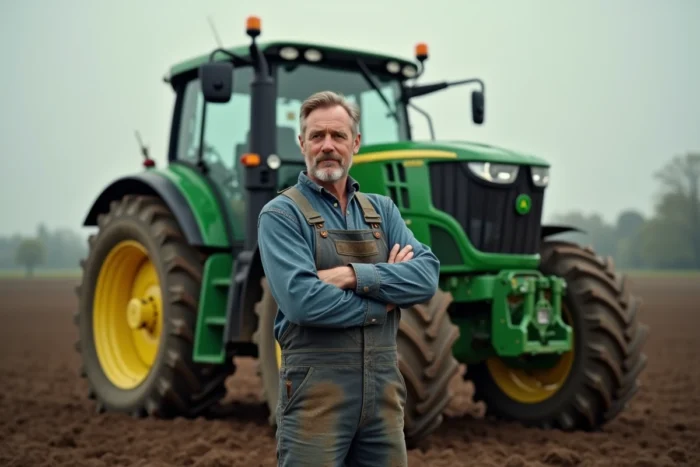
The price of a new agricultural tractor varies widely depending on power, brand, and level of equipment. Between a micro-tractor with 20 horsepower and a large-scale machine exceeding 250 horsepower, the budget gaps are considerable. Comparing price ranges by power segment allows for a realistic purchasing project, taking into account a French market where new registrations are declining and used equipment is more significant than ever.
Decline in new registrations in 2024: what the figures reveal
Before setting a budget, a key fact deserves attention. Registrations of new tractors have dropped by 13% in 2024 in Europe, according to data compiled by Accio.
This decline does not mean that prices are falling. Catalog prices remain stable, or even trending upwards in certain segments. Dealers, facing less turnover, have reduced negotiation margins. To know exactly how much a new tractor costs, one must cross-reference the targeted power segment with the manufacturer’s pricing policy.
Meanwhile, the used market accounts for 62% of tractor sales in France in 2024. This dominance of the used segment drives resale prices up and alters the profitability calculation for those hesitating between new and second-hand.
Price of a new agricultural tractor: factors that influence the bill
Several parameters explain the considerable price differences between two tractors of comparable power. The transmission represents a significant cost item. A tractor equipped with a continuously variable transmission (CVT) costs significantly more than a model with a mechanical gearbox or semi-powershift. In the medium and high power segments, the difference can amount to several tens of thousands of euros.
The level of onboard electronics (GPS guidance, telemetry, automated tool management) also increases the bill. Hydraulic options, the number of distributors, and lifting capacity directly influence the final price.
Tractor brands and pricing positioning in France
The French market remains dominated by a few manufacturers whose pricing structures differ significantly. John Deere, New Holland, Fendt, Claas, Valtra, Kubota, and Massey Ferguson account for the majority of sales.
- John Deere occupies the high end of the market in the medium and high power segments, with a dense network of dealers that supports resale value.
- Massey Ferguson and New Holland offer mid-range models often perceived as providing good equipment-to-price ratios in the 80-150 hp segment.
- Fendt and Claas position themselves in the premium segment, with Vario transmissions (Fendt) or advanced hydraulic systems that justify higher prices.
- Kubota targets small to medium-sized farms and market gardening, with entry prices among the most accessible on the market.
The choice of brand commits one for the long term. An agricultural tractor typically remains in operation for ten to fifteen years on average. The availability of wear parts (filters, tires, clutches, cylinders) and the proximity of an authorized workshop weigh as heavily as the initial purchase price.
Depreciation and total cost of ownership
A new tractor loses a significant portion of its value during the first few years. Well-maintained models with low operating hours retain a strong market value in the used sector, especially as demand is high.
The total cost of ownership far exceeds the purchase price. Routine maintenance, fuel consumption, insurance, and financing (leasing or bank loan) add to the annual bill. Over a ten-year ownership period, these cumulative costs can represent an amount comparable to the acquisition price.
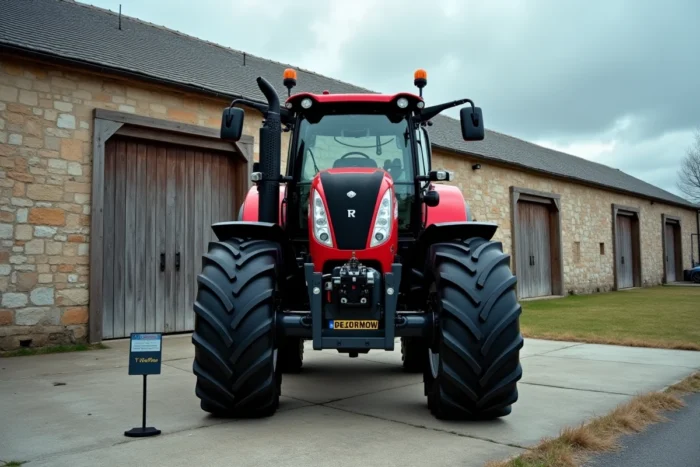
Segment 41-60 hp: the growing niche for small farms
Among recent data, the 41-60 hp segment stands out as the one showing the strongest growth worldwide. This power range corresponds to the needs of market gardening, viticulture, or diversified farms that do not require the 150 horsepower of a cereal farming tractor.
This segment also attracts new buyer profiles: new farmers starting out, local authorities, landscaping companies. Competition among manufacturers is fierce, which keeps pressure on catalog prices. The profitability calculation differs significantly from that of a large tractor: annual usage hours are often lower, which extends the amortization period but reduces mechanical wear.
In 2024, setting a budget for a new agricultural tractor requires thinking beyond just the catalog price. The necessary power, hydraulic compatibility with existing tools, transmission, and local maintenance network determine the actual cost over the machine’s entire lifespan.
In a market where nearly two out of three tractors sold are used, new remains a choice justified by the manufacturer’s warranty and access to recent technologies, provided that the total budget, including financing, is calibrated from the outset.