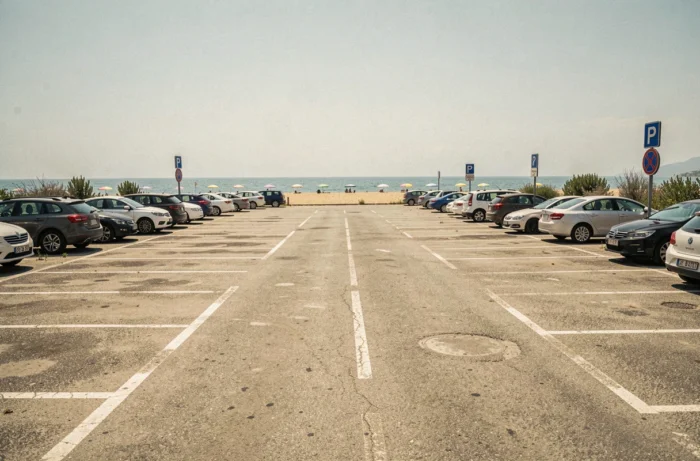
Arriving by car on the coast of Pisa on a summer morning often means discovering parking lots already full by ten o’clock. The beaches of Marina di Pisa, Tirrenia, and Calambrone attract both locals and tourists, and parking quickly becomes the first headache of the day. A few concrete tips can help avoid unpleasant surprises and enjoy the seaside without stress.
Illegal parking attendants on the Pisan coast: the trap to know before parking
Have you ever seen someone signaling you to park, then asking for a few euros when you return? On the beaches of Pisa, this phenomenon has a name: illegal parking attendants, these fake parking guardians. The local police in Pisa regularly target them during control operations, as they are particularly active in Marina di Pisa and Tirrenia during the high season.
The problem is not just the money they ask for. It’s mainly the false sense of security. Paying an unofficial individual does not protect your vehicle. In case of theft or damage, there is no recourse.
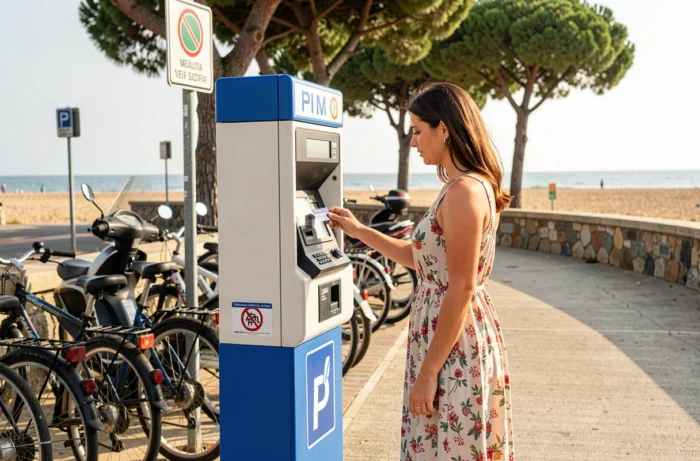
Identifying them is simple: a legitimate parking lot managed by Pisamo or the municipality displays payment terminals, a pricing sign, and often a phone number. No terminal, no ticket, no legitimate guardian. If someone approaches you in a vacant lot waving their arms, just walk away. Knowing where to park in Pisa near the beach starts with distinguishing official spots from the gray areas exploited by these touts.
Free parking near the beaches of Pisa: Via Pietrasantina and alternatives to the north
The most well-known parking area in the sector is located on Via Pietrasantina, northwest of Pisa. Managed by Pisamo, it offers about 700 free parking spaces for cars. It is mainly designed for visitors to the Piazza dei Miracoli, but it also serves as a starting point to the coast if you combine cultural visits with beach time.
This parking area has public restrooms, a water point, and a fuel dispenser. Motorhomes and buses, however, pay a daily rate.
Further north, the Via del Brennero area (also known as Via Paparelli) offers another option with about 750 spaces. No buses allowed, but facilities for motorhomes are available. This parking is located about a kilometer from the Piazza del Duomo, making it convenient for reaching the coast by shuttle or car after your visit.
Getting to Marina di Pisa from these parking lots
From Via Pietrasantina or Via del Brennero, expect about fifteen minutes by car to reach Marina di Pisa. The route takes secondary roads that are often smooth outside of weekends. Tirrenia is a bit further south, with Calambrone beyond that.
The advantage of parking first in these free lots: you avoid the congestion of the waterfront and wild parking spots. The downside is that you need to get back in your car or find a bus to the beach.
Paid parking on the coast: rising rates and new spots
The municipality of Pisa decided in early August 2026 to create 50 new paid parking spaces in the areas of the viadotto Mattei (near the airport) and the zone between via Quarantola and piazzale degli Scali. These spots are not directly on the beach, but they serve as overflow parking for those combining city and coast.
This decision is part of a trend visible along the entire Pisan coast. In Marina di Vecchiano, just to the north, summer parking rates are also rising for the 2026 season. Free parking by the sea is becoming scarcer each year.
What this means for your beach budget
Planning for a parking expense in your budget is no longer optional. Here’s what to anticipate:
- Blue line parking (strisce blu) is paid by the hour. Look for the nearest terminal and keep the ticket visible on the dashboard.
- White line parking (strisce bianche) is free but rare on the coast in summer. They fill up early in the morning.
- Yellow line parking is reserved for residents or public services. Parking there risks an immediate fine.
Arriving before 9 AM remains the best strategy to find a free spot or one close to the beach. After that hour, options quickly diminish.
Pisa’s ZTL and the coast: two different traffic logics
Why mention this when heading to the beach? Because many visitors pass through the center of Pisa before reaching the coast and unknowingly cross a ZTL. The Zona a Traffico Limitato in the historic center is monitored by cameras. A violation results in a fine that follows you even abroad.
The coast itself is not in a ZTL, but traffic is modified in summer. In Tirrenia, for example, road and parking modifications are implemented for summer events like concerts in the piazza dei Fiori. These temporary changes can eliminate spots that are usually available.
How to avoid the ZTL when going to the beach
If you are coming from the highway or the airport, bypass the center using peripheral routes (SGC FI-PI-LI or the coastal road). Set your GPS to “avoid downtown” and do not follow tourist signs to the Piazza dei Miracoli if you are heading straight to the sea.
Navigation apps now indicate Italian ZTLs, but not always in real-time. Check the physical signs at each zone entry: a red circle with “ZTL” and the activation times clearly indicates whether you can pass.
Summer shuttles and alternatives to driving on the Pisan coast
The city of Pisa operates seasonal shuttles to serve the coast. They generally depart from relay parking or the center and drop passengers near the main beaches.
This option is worth considering on weekends in July and August when parking becomes almost impossible in Marina di Pisa after the morning. Parking on the outskirts and taking the shuttle avoids both the stress of searching for a spot and the risk of getting stuck in traffic on the way back.
Another possibility is biking. Pisa has bike lanes that connect the city to the coast. The distance remains reasonable for experienced cyclists, and several rental shops offer bikes for the day in the city center.
Parking on the Pisan coast becomes increasingly complicated each summer, with rising rates, more paid spots, and tourist pressure. Anticipating your arrival time, spotting official parking lots, and having a backup plan with shuttles or bikes turn a predictable hassle into a simple logistical formality.