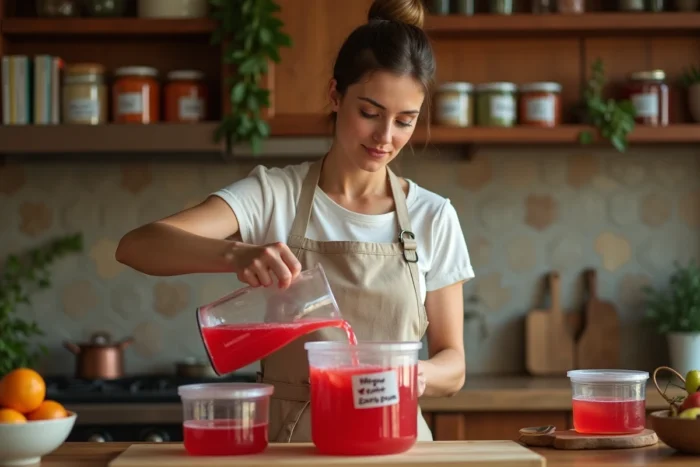
Freezing a homemade punch makes sense when preparing several liters for a party. However, the question deserves to distinguish what freezes well from what loses all interest once thawed. Alcohol, fresh fruits, herbs, sugar: each component reacts differently to extreme cold, and the final result mainly depends on the initial composition of the punch.
Freezing Punch: What Each Ingredient Can Actually Withstand
Not all punches are equal in the freezer. A rum-heavy planter does not freeze the same way as a non-alcoholic punch made from fruit juice. The table below summarizes the behavior of the main components.
| Component | Freezing Behavior | Result After Thawing |
|---|---|---|
| Fruit juice base (without chunks) | Freezes properly, homogeneous texture | Overall flavors preserved |
| Chunks of fresh fruit | Cellular water crystallizes, fiber bursts | Pasty texture, disintegrated fruit |
| Fresh herbs (mint, basil) | Brown discoloration, loss of delicate aromas | Altered taste, darkened appearance |
| Rum or other strong alcohol | Does not freeze completely (lower freezing point) | Possible separation between liquid phases |
| Sugar syrup / dissolved sugar | Lowers freezing point, freezes slowly | Correct texture if well mixed |
The “result after thawing” column shows a clear pattern: liquid and dissolved elements fare well, while solid and fragile elements degrade. A filtered punch, without chunks or herbs, retains its qualities much better than a garnished punch.
Knowing whether one can freeze homemade punch thus involves examining the recipe before filling the ice tray.
Punch with Fresh Fruits and Mint: Why Freezing Degrades the Taste
Chunks of fruit contain a high proportion of water. When this water freezes, ice crystals puncture the cell walls. Upon thawing, the fruit releases its water, loses its structure, and becomes mushy.
For a punch like apple-kiwi-mint, the problem is twofold. Kiwis create an almost liquid texture, and the mint browns and loses its delicate aromas after freezing. The result resembles more of a diluted compote than a festive drink.
Feedback from culinary forums confirms this observation. A user who froze sangria (composition similar to a fruity punch) reported that the drink had “lost all its flavor as if water had been added.” The mechanism is the same: freezing breaks the aromatic structure of fragile fruits and herbs.
Garnishes That Withstand Freezing Better
Some fruits handle freezing better than others. Citrus fruits (lime, orange) hold up well if sliced thinly, as their citric acid content partially limits degradation. In contrast, soft-fleshed fruits (banana, ripe mango, strawberry) almost systematically break down.
Freezing the Punch Base Separately: The Method That Preserves Flavors
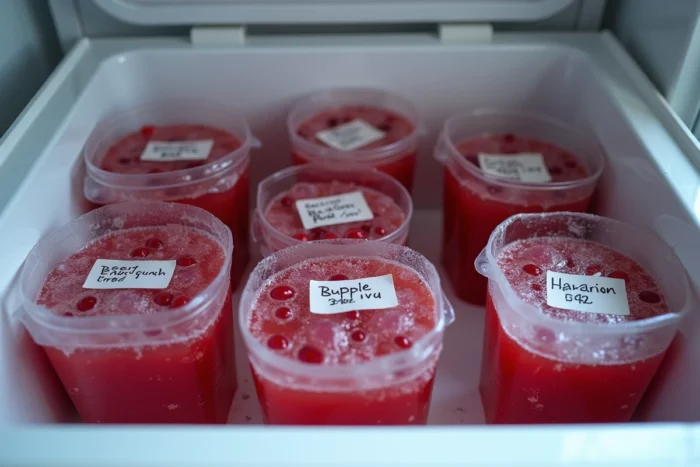
The most reliable strategy is to freeze the liquid base (juice and sugar) separately and add fresh fruits at the last moment. This two-step approach avoids the main pitfall: mushy fruits that contaminate the overall taste.
Specifically, the method breaks down as follows:
- Prepare the mixture of juice, syrup, and possibly rum, then pour it into an airtight container, leaving space for liquid expansion
- Freeze this base without any fruit chunks or herbs, labeling the container with the preparation date
- On the day of serving, thaw the base in the refrigerator (not at room temperature, to limit microbial growth), then add the freshly cut fruits and herbs just before serving
This method also has an advantage in terms of preservation. Preparations made with fresh fruit juice must be consumed quickly or kept cold, as chunks of fresh fruit promote microbial growth after a few days in the refrigerator. Rapid freezing of the liquid base halts this process.
What Container to Use for Freezing Punch
Glass bottles should be avoided: the liquid expands when freezing and can shatter the glass. Food-grade plastic bottles work, provided they are not filled beyond three-quarters. Ice cube trays are an option for small quantities, convenient if the punch serves as a base for individual cocktails.
Common Mistakes to Avoid When Thawing Punch
Thawing is just as important as freezing in the final quality of the drink. Several mistakes occur regularly.
- Thawing at room temperature for several hours: this practice exposes the punch to a temperature zone conducive to bacterial growth, especially if the recipe contains little or no alcohol
- Refreezing a punch that has already been thawed: the taste quality degrades with each cycle, and health risks significantly increase
- Mixing the thawed base without tasting: a punch that has been in the freezer often loses intensity, and it usually requires readjusting the sugar or acidity after thawing
- Adding excess ice cubes to speed up the process: this dilutes the drink and exacerbates the loss of flavors already weakened by the cold
For a punch containing rum, thawing in the refrigerator takes longer than for a non-alcoholic punch, as alcohol lowers the freezing point and creates a partially liquid mixture that takes time to homogenize.
A classic planter also keeps very well for a few weeks in the refrigerator or in a cool place, without needing freezing. The refrigerator’s cold is sufficient, provided it is consumed within a reasonable time and noting that it gains alcoholic strength over time (the juices fade, the rum dominates).
Freezing remains a useful stopgap solution, not an optimal preservation method. A punch prepared the day before and stored in the refrigerator will almost always offer a better taste result than a frozen and then thawed punch, regardless of the method used.