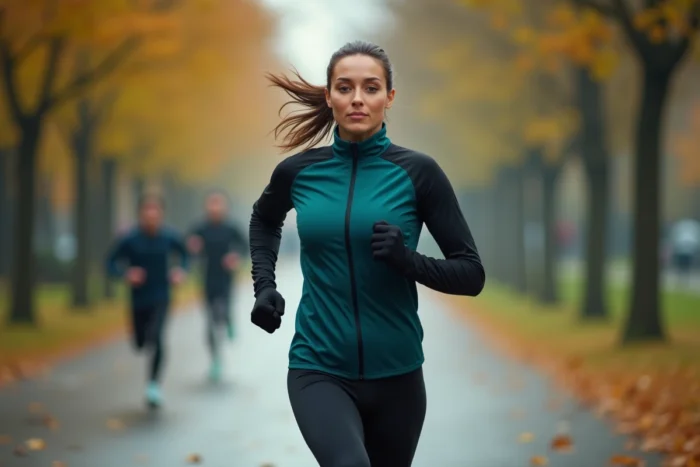
Sports practice in France is undergoing a period of restructuring. Between the budgetary decisions of the National Sports Agency (ANS), the emergence of professional sectors dedicated to sports business, and the rise of more flexible practice formats, the conditions under which one experiences a passion for sports are changing significantly. Not only on the field, but also in access to facilities, in training pathways, and in how local authorities organize the local sports offer.
Funding for sports facilities: what ANS decisions change for practitioners
Access to regular sports practice primarily depends on the availability of nearby facilities. In this regard, the 2026 campaign of the ANS confirms a structuring direction: prioritize funding for areas lacking equipment, meaning priority urban neighborhoods, rural areas, and overseas territories.
Project leaders must now demonstrate that their infrastructure addresses a real local practice gap. This requirement alters the investment landscape. A gymnasium or multi-sports field will not be funded in the same way depending on whether it is located in a well-equipped metropolis or in a rural community without a covered hall.
To stay updated on disciplines and find resources on sports equipment, a page like https://www.sport-univers.fr/ allows users to cross-reference information by sport and need. This territorial logic has direct consequences: enthusiasts living in previously under-equipped areas may see new facilities emerge in the coming years, while other territories will need to seek additional funding.
New forms of sports practice: between free sports and discovery events
The Sports Festival and promotional initiatives led by federations illustrate a shift. We move from very general communication (“move more”) to segmented actions: targeted open days, supervised introductions by discipline, traveling events like the Playa Tour organized by UFOLEP.
Free sports are gaining ground in metropolitan areas. Cities like Nantes are structuring an offer of freely accessible spaces (sports courses, open fields) that do not require club membership. This trend responds to a demand for flexibility: practicing without time constraints, without annual commitment, without relying on a fixed time slot.
Field feedback on this point varies. Some sports educators believe that free sports weaken the associative model, while others see it as a first step towards regular practice that can lead to club registration. Both coexist, and the boundary between supervised sports and autonomous sports is becoming more porous.
What this changes for recovery and training
Practicing autonomously means managing what the club used to handle: warm-up, progression, recovery. Without supervision, the risk of injury increases, especially for practitioners returning after a long break.
- Active recovery (walking, joint mobility) is still underestimated by autonomous practitioners, who go directly from effort to complete rest
- Post-effort nutrition is not limited to proteins: hydration and carbohydrate intake within half an hour after exercise condition the quality of the next session
- Monitoring training load, even approximately (duration, perceived intensity), helps avoid overload weeks that precede most overuse injuries
Sports business and training: living your passion beyond the field
Passion for sports is not only expressed through practice. Organizations like MediaSchool Sports offer training in sports management, sports marketing, and event management. Sports as an economic sector opens professional pathways that did not exist in this form ten years ago.
These programs respond to a concrete need: clubs, federations, and companies in the sector are looking for profiles capable of managing online communities, organizing events, or leading commercial partnerships. The Ministry of Sports also points out this orientation towards sports business careers as a pathway for young enthusiasts at the end of their schooling.
Selection of sought-after skills in the sector
Job postings in the sports business highlight hybrid skills:
- Event project management, with a strong logistical component (ticketing, security, flow management)
- Production of digital content tailored to sports social media, where short video dominates
- Performance data analysis, both for athletes and for audiences and sponsors
- Regulatory knowledge, particularly on issues of audiovisual rights and sports governance
Sports equipment and training techniques: what deserves investment
Wearables (smartwatches, motion sensors) are among the major trends identified by the American College of Sports Medicine for 2026. Their usefulness entirely depends on the practitioner’s ability to filter relevant data. Accumulating metrics without knowing which ones to monitor produces the opposite effect of what is desired: confusion, demotivation, abandonment of the tool.
A heart rate tracker becomes useful when one knows what to expect from it. For a runner, monitoring heart rate at the aerobic threshold is sufficient to adjust intensity. For a gym fitness practitioner, time under tension and total load volume per session are more telling than daily step counts.
Body and performance: adapting equipment to the sport practiced
A common mistake is to buy versatile equipment when the discipline requires specificity. Running shoes used for indoor climbing do not protect the toes or the arch of the foot properly. Equipment suited to one’s discipline reduces the risk of injury much more effectively than poorly targeted muscle strengthening.
The choice of equipment should be guided by a professional in the practiced sport, not by a general recommendation algorithm. Online selection guides can provide direction, but they cannot replace real-world testing or the advice of a coach who understands the biomechanics of the discipline.
The coming months will reshuffle the cards for sports enthusiasts in France. Between new equipment funded by the ANS in under-equipped areas, the rise of free sports in urban settings, and the expansion of sports professions, the ways to experience one’s sports passion are diversifying. One constant remains: regularity and adaptation to one’s own body matter more than any trend.