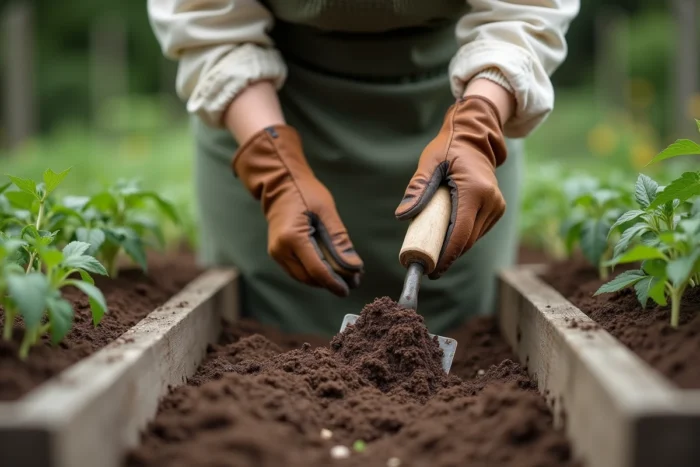
Have you ever scraped the soil with an ill-suited tool, straining your back to pull out three weeds? A hoe and a cultivator look similar in the shed, but they serve very different purposes in the vegetable garden. Understanding what distinguishes them allows you to work the soil without unnecessary effort.
Anatomy of the blade: what separates a hoe from a cultivator
The hoe has a single flat blade, rectangular or trapezoidal, fixed perpendicularly to the handle. Its edge attacks the soil at the surface, within the first two or three centimeters. It cuts the roots of weeds with a horizontal back-and-forth motion, without turning the soil.
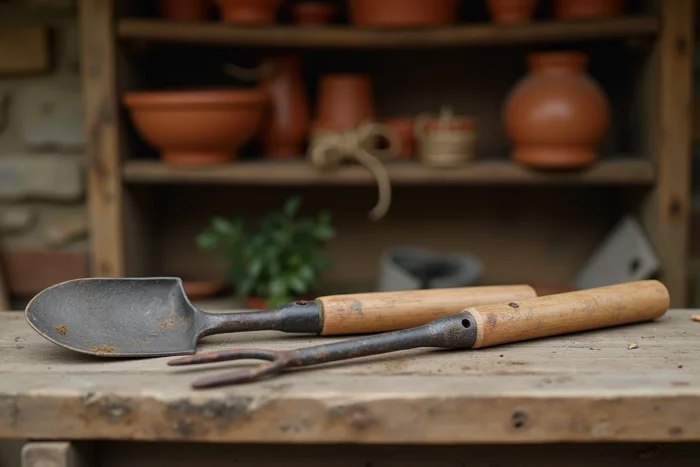
The cultivator combines two opposing heads on the same handle. On one side, a flat blade for weeding and hoeing. On the other side, depending on the model, a pointed tongue for digging furrows or a two-pronged fork for scratching the soil. This double head makes all the difference: you switch from one function to the other by turning the tool in your hands.
When comparing the hoe or cultivator and their uses, the choice criterion boils down to one question: do you need a single action (weeding) or several consecutive actions (weeding, tracing, aerating)?
Hoeing to save water: an underestimated action in the vegetable garden
Hoeing is associated with weeding. Logical: the blade slices through unwanted seedlings. However, the primary benefit of hoeing concerns water.
When the soil dries, a crust forms on the surface. This crust acts like a wick: it draws moisture from the deeper layers by capillarity, and the water evaporates. By breaking this crust with a hoe or the blade of a cultivator, you interrupt this phenomenon. Breaking the surface crust can significantly reduce water loss from the soil during hot spells.
The old saying “one hoeing is worth two waterings” is based on this precise mechanism. Before a summer storm or just after watering, hoeing between rows of vegetables improves infiltration and limits runoff.
When the cultivator has the advantage over the hoe
For a tightly spaced vegetable garden (lettuces, carrots, radishes), the cultivator offers a sequence that the hoe does not allow. You hoe between two rows with the blade, then you turn the tool to trace a sowing furrow with the tongue, or to aerate the soil between the plants with the fork.
This time-saving may seem trivial over one square meter. Over a six-meter-long bed, not having to put down the tool to pick up another changes the work rhythm. Fewer trips back and forth to the shed, fewer unnecessary movements.
Handle angle and sharpening: two adjustments that change everything
Have you ever felt wrist pain after half an hour of hoeing? The problem often lies in the angle between the handle and the blade.
Recent ergonomic tests (ErgoJardin 2024) show that an angle of about 70 degrees between the handle and the blade reduces strain on the wrists and shoulders. If the angle is too open, it forces you to raise your elbows. If too closed, it requires you to bend over more. On entry-level models, this angle is rarely optimized.
The choice of handle also matters. A wooden handle (ash, beech) absorbs vibrations better than a steel tube. The brand Leborgne, for example, offers interchangeable handles that allow you to adjust the length to your height.
Sharpening the blade: a forgotten action that reduces effort
A dull blade no longer pulls out roots; it pushes them away. You compensate by pressing harder, which tires your back and arms. According to the same ErgoJardin tests, sharpening the blade every 50 m² worked reduces muscle effort by about 15%.
A quick pass with a flat file on the blade’s bevel is enough; count on one minute of work. On a cultivator, remember to sharpen both heads: the blade and the tongue (or the fork tines if they are worn).
- Always file in the same direction, from the heel to the tip of the blade, to maintain a consistent bevel.
- After each gardening session, wipe the blade and apply an oiled cloth to prevent rust.
- Check the tightness of the socket on the handle before each use: a loose head damages the fitting and strains the wrist.
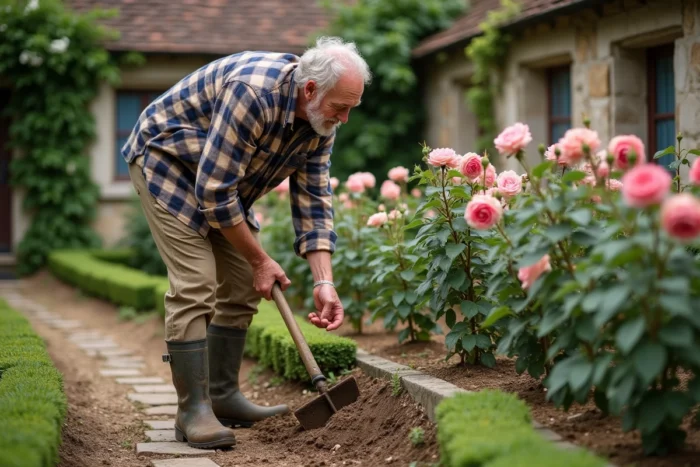
Hoe or cultivator: concrete criteria for choosing
The choice depends on your soil and your main tasks. Here are the situations where each tool is justified.
- Light and sandy soil, weeding only: the hoe is sufficient. Its fine blade glides easily through loose soil.
- Clay and compact soil, need to trace furrows: the cultivator with a pointed tongue allows for hoeing and digging without changing tools.
- Diverse vegetable garden with regular sowing: the forked cultivator combines hoeing, aeration, and row preparation.
- Flower beds or narrow borders: a hoe with a narrow blade offers more precision between closely spaced plants.
If you can only buy one tool for a small vegetable garden, the cultivator with a blade and tongue covers more situations. For an ornamental garden where weeding dominates, the hoe remains the most straightforward choice.
One last often-overlooked point: the working depth. Hoe and cultivator work the top five centimeters of the soil, no more. If you need to loosen deeper, you should switch to a spading fork or a broadfork. Confusing the roles means forcing a tool beyond its function, leading to premature wear.