Finding an activity that appeals to both a four-year-old and a teenager can sometimes be a puzzle. However, original family ideas abound, provided you step off the beaten path and take into account one reality: the vacation budget of French households has been at its lowest for several years, prompting a reinvention of shared leisure without necessarily opening the wallet.
Low-budget family activities: frugal creativity as a driving force
The decline in vacation budgets is not just an abstract figure. It translates into concrete choices: fewer paid outings, shorter stays, and closer to home. This constraint has an unexpectedly positive effect: families invent more personal and memorable activities.
Have you ever noticed that the most lasting memories rarely come from an amusement park? A herbarium made in the forest, a film shot with a phone in the garden, or an improvised cooking evening leave a stronger mark. The principle is simple: replace spending with everyone’s involvement.
Here are a few ideas that cost nothing or almost nothing:
- Geocaching, a treasure hunt guided by GPS on a free app, works all over France and transforms an ordinary walk into an expedition for both children and adults.
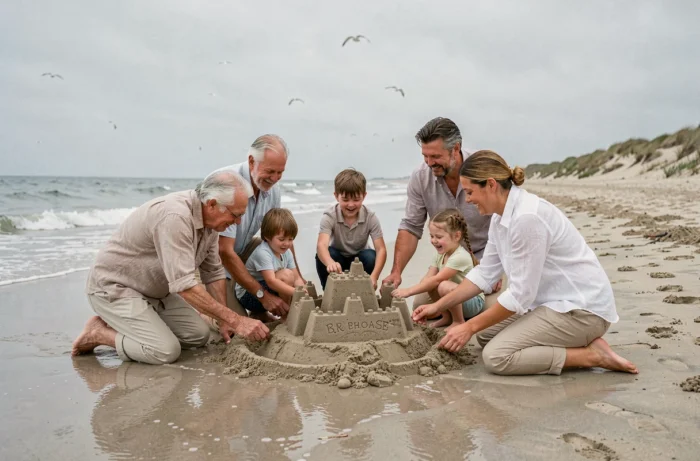
- Land art in the forest or on the beach involves creating ephemeral compositions with natural elements (pebbles, leaves, driftwood). Each family member creates their own piece, and then the whole is photographed.
- The family time capsule: everyone slips an object, a drawing, or a letter into a box. The box is sealed, and an opening date is set, for example, in a year. When the day comes, the reunion with these memories is often moving.
To explore other formats of activities suitable for families, you can access Un P’tit Air de Famille and browse their suggestions by theme.
Short family vacations: making the most of a reduced stay
The current trend is clear: the vast majority of French families are modifying their stays to shorten them or stay closer to home. A well-thought-out short stay is better than a poorly filled week.
A common mistake is trying to fit everything into three days. It’s better to choose a single guiding theme: nature, water, local cuisine, or wildlife observation. This guiding theme gives coherence to the stay and avoids the fatigue of an overloaded “schedule” that children endure more than they enjoy.
Building a mini-stay around water
Water is a universal magnet for children. No need for a cruise or camping by the sea to enjoy it. A lake, a river, or a canal is enough.
Renting an electric boat without a license on a canal for two hours costs much less than a day at a water park. Children participate in navigation, observe wildlife, and have lunch on board. The activity becomes the adventure itself, not just simple entertainment.
For stays at home, a simple water game in the garden (obstacle course with sponges, bucket relays, water painting on the exterior walls) can occupy an entire afternoon without any expense.
Nature activities for families: slowing down to observe
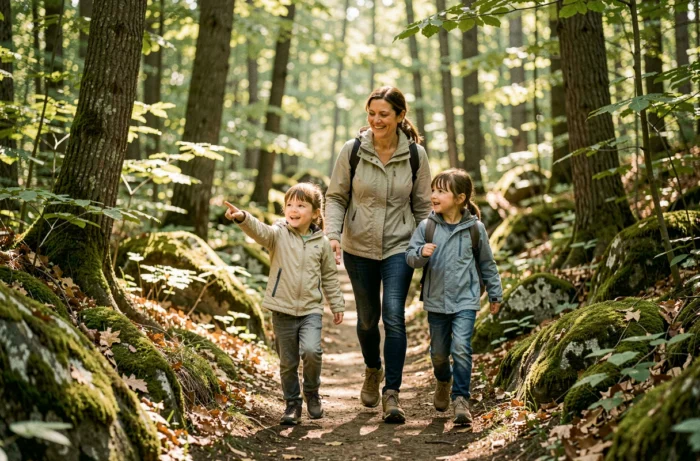
Children are born naturalists. They spot an insect, an animal track, or a strange plant long before adults do. Why not turn this curiosity into a structured activity?
The family field notebook is a remarkably simple tool. Each outing (park, forest, garden, seaside) results in a double page: a drawing or a glued photo on one side, a description on the other. Over the weeks, the notebook becomes a personal encyclopedia that children consult with pride.
Stargazing without equipment
Astronomy with the naked eye is accessible from the age of five or six. Just locate the Big Dipper, then learn to find the North Star. A free sky map app identifies constellations by pointing the phone at the sky.
This activity works while camping, in the garden, or even from a sufficiently clear balcony. Children remember the names of the stars much faster than adults, which reverses the roles and gives younger ones a rare sense of competence.
Indoor games for rainy or hot days
On days when going out is not an option, the temptation of screens is strong. A few alternatives require minimal preparation but can occupy hours.
The family cooking tournament works particularly well. Each participant has the same basic ingredients and must invent a recipe within a time limit. Children love the competitive aspect, and the result is edible, which is a change from crafts that leave you wondering what to do with them.
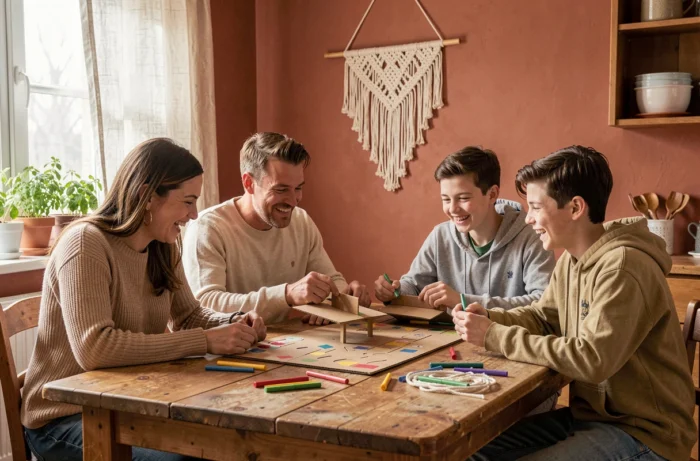
Another option: making a homemade board game. A board drawn on cardboard, rules invented collectively, game pieces shaped from salt dough. The creation process occupies as much time as the subsequent games. A seven-year-old is perfectly capable of designing coherent rules if guided with a few questions (“What happens when you land on this space?”).
For teenagers, a homemade escape game using printed puzzles and combination locks transforms the living room into a breakout room. Preparation takes about an hour for a parent, but the family game creates a memorable experience.

The best family ideas depend neither on budget nor destination. They rely on one ingredient that children immediately detect: the real presence of adults, phones put away, shared attention. An afternoon spent building a raft from sticks in the garden leaves a much more lasting mark than an expensive outing where everyone looks in a different direction.