The C5 Aircross uses a tire pressure monitoring system (TPMS) whose reset procedure varies depending on the type of sensors installed. Confusing indirect and direct TPMS on this model leads to unnecessary actions, or even a warning light that persists after intervention.
Indirect or direct TPMS on the C5 Aircross: identify the system before any manipulation
The distinction is crucial. The indirect TPMS uses ABS sensors to detect a change in wheel rotation speed, indicating a change in diameter related to a loss of pressure. This system does not measure actual pressure: it compares relative differences between the four wheels.
The direct TPMS, on the other hand, relies on physical sensors integrated into each valve. It transmits a pressure value for each wheel, displayed individually on the dashboard or central screen.
In the early versions of the C5 Aircross, Citroën primarily used the indirect TPMS. The facelifted versions sold from 2022 increasingly feature a direct TPMS with sensors in the valves, especially on higher trims. This trend is explained by the vehicle’s high mass (SUV segment C) and the growing demands for safety and alert comfort.
To determine which system equips your vehicle, check for the presence of metal valves (typical of direct sensors) or consult the technical sheet in the maintenance booklet. A visit to a tire specialist can also clarify the doubt in just a few minutes.
We recommend never attempting to reset the tire pressure on the C5 Aircross without first identifying the type of TPMS: the procedure differs completely between the two systems.
Resetting the indirect TPMS on Citroën C5 Aircross: step-by-step procedure
On a C5 Aircross equipped with the indirect system, the reset is performed from the driver’s seat, without diagnostic tools. The procedure recalibrates the reference values of the ABS calculator by indicating that the current pressures are correct.
Prerequisites before starting the reset
Inflate all four tires to the pressure recommended by the manufacturer. The label is located on the driver’s door pillar. Check when cold, with the vehicle parked for at least two hours.
A poorly inflated tire at the time of reset skews the calibration for several thousand kilometers, until the next reset.
Steps of the procedure
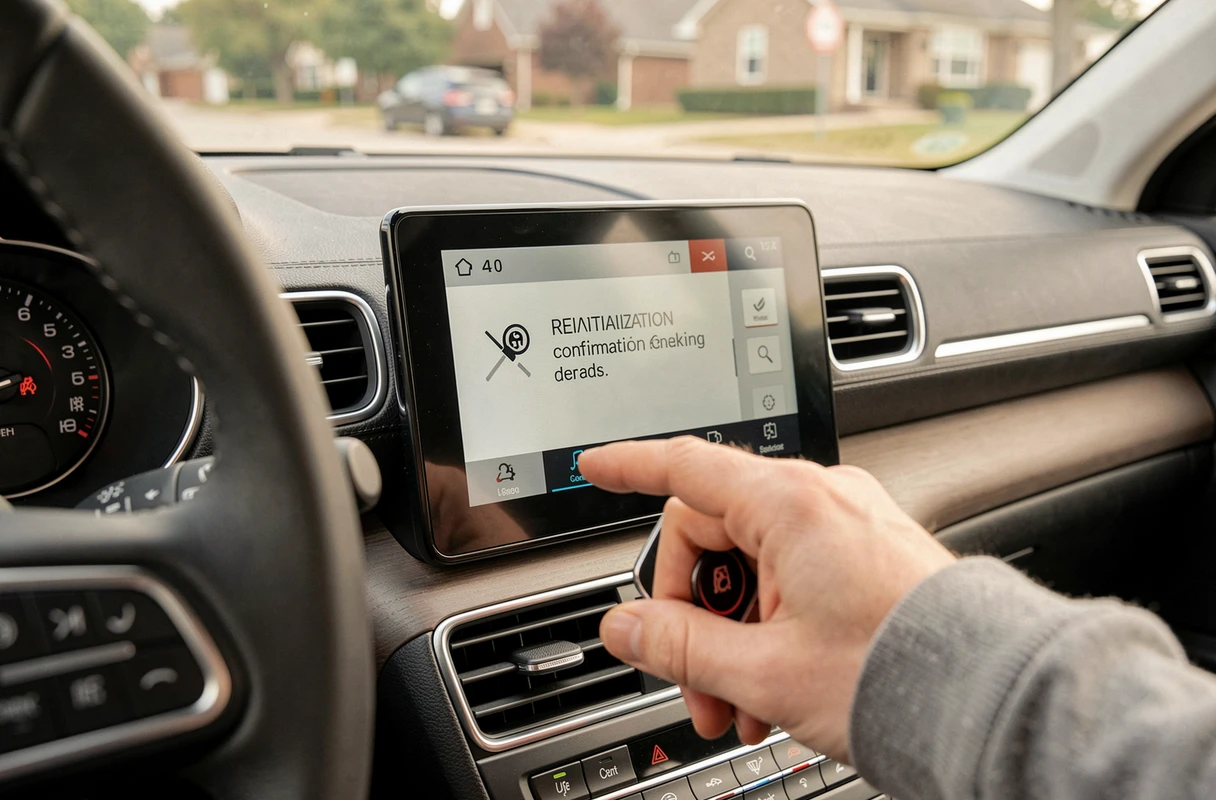
- With the ignition on (engine off or on depending on the version), access the vehicle menu via the central touchscreen or the consultation button located under the digital display.
- Navigate to the “Tire Pressure” or “Pressure Check” section. On some versions, this option is found under “Vehicle Alerts”.
- Select “Reset” or “Calibrate” and confirm. The system records the current rotation speeds as reference values.
- Then drive for about ten minutes at a stabilized speed for the calculator to validate the new calibration. The TPMS warning light should turn off.
If the light persists after this driving phase, repeat the procedure, ensuring that the pressure is rigorously identical on all four wheels. A slight difference between two tires on the same axle can prevent validation.
Resetting the direct TPMS: what changes with valve sensors
With a direct TPMS, software reset from the dashboard is not always sufficient. The valve sensors transmit their unique identifier to the calculator via radio frequency. When changing wheels (rotation, switching to winter tires, replacing a sensor), the system must relearn the identifier of each sensor and associate it with the correct position on the vehicle.
On the C5 Aircross equipped with this system, the pairing procedure generally requires a compatible diagnostic tool (such as a manufacturer tool or a multi-brand scanner with TPMS protocol). Some versions allow for automatic relearning after a few kilometers of driving, but this is not systematic.
Common cases requiring re-pairing
- Front/rear wheel rotation: the sensors change position, and the calculator must update the assignment.
- Replacement of a faulty sensor: the new identifier must be recorded.
- Mounting winter rims equipped with different sensors: each set of sensors has its own identifiers.
In the workshop, we observe that the majority of persistent TPMS warning lights on facelifted C5 Aircross models result from seasonal rotation without re-pairing. The system then displays an inconsistent pressure (rear pressure in the front position, for example) or triggers an unjustified alert.
TPMS warning light on C5 Aircross that remains on: diagnose the real cause
A TPMS warning light that does not turn off after reset rarely indicates a software defect. In the vast majority of cases, the problem is hardware-related or due to a procedural error.
First check: the sensor battery. In a direct TPMS, the sensors are equipped with a battery whose lifespan is limited (several years under normal use). When the battery weakens, the sensor transmits intermittently or stops communicating. The light then comes on without relation to the actual pressure.
Second possibility: a slow leak. A tire that loses a few hundredths of a bar per week may go unnoticed during a visual check but will trigger the indirect TPMS after a few days of driving. The water bath method in the workshop remains the most reliable way to locate a micro-leak at the bead or valve level.
Third frequent cause: a sensor damaged during tire mounting. Direct valve sensors are fragile. A poorly positioned tire lever can break the antenna or body of the sensor without visible external signs. Demand a TPMS-compatible mounting from your provider.
Since 2014, UNECE regulation No. 64 has made it mandatory for all new passenger cars in the EU to have a functional TPMS. Driving with a faulty sensor does not trigger a penalty during technical inspection at this stage, but the system must be operational to validate the vehicle’s compliance.
Resetting the tire pressure on a C5 Aircross remains an accessible operation as long as the logical order is followed: identify the type of TPMS, adjust the pressure when cold, and then apply the corresponding procedure. For a direct system, planning a visit to a workshop equipped for re-pairing avoids hours of unnecessary trial and error.